
3-on-3 Spring League
Fast-paced mini games that force constant talk, support, and puck exchanges with short benches.
Skill Pillar
The best teams make five players feel like one unit. Teamwork connects communication, spacing, and support habits so everyone anticipates the same solution.
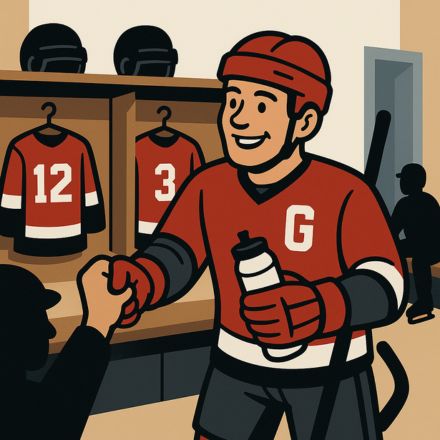
Teamwork is the ability to synchronize your play with the four teammates on the ice and the ones waiting on the bench. It shows up in how quickly you support the puck, communicate switches, and cover for a teammate’s mistake without hesitation.
Use consistent language: “Wheel” for the breakout, “Bump” for a reverse, “Push” when activating the weak-side D. Build your own dictionary and stick to it.
Assign a bench captain each period to track communication.
Schedule 15-minute unit meetings once a week.
Use before playoffs or showcases to confirm your line is connected.
Watch one clip together, then recreate the spacing and communication in practice.
Avalanche Flow Drill. Fast-paced passing pattern that forces all five players to fill lanes and communicate timing. Open on YouTube
Six Pass Shooting Drill. Excellent for teaching quick puck movement and verbal cues before attacking. Open on YouTube
High Intensity Team Drills. Miami (OH) coach Enrico Blasi demonstrates drills focused on pace and group connections. Open on YouTube
Cutting Edge Ice Academy
Layer communication, support routes, and puck movement that matches the Teamwork pillar.
Fast-paced mini games that force constant talk, support, and puck exchanges with short benches.
Coach-led reps that focus on spacing, give-and-go timing, and shared problem solving.
Rotate roles quickly so you read, react, and cover for linemates even when shifts get chaotic.
Collection of team-based drills to build communication and quick support.
Browse drillsDefine each player’s role, forecheck trigger, and breakout responsibilities.
Download PDFEpisode with college coaches on creating player-driven standards for teamwork.
Listen online